
Kamloops Boom Lift Certification
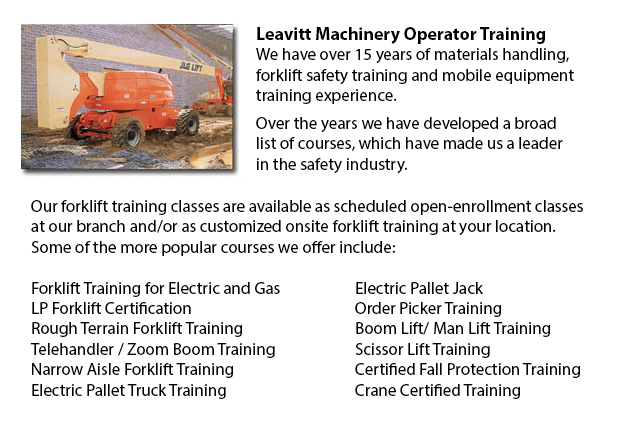

Kamloops Boom Lift Certification - Utilizing elevated work platforms allow for work and maintenance operations to be done at elevated work heights that were otherwise not reachable. Boom Lift Certification Training educates workers regarding safely operating scissor lifts and boom lifts.
Despite the range in lift style, site conditions and applications, all lifts have the potential for death or serious injury when not safely operated. Falls, electrocution, tip-overs and crushed body parts could be the unfortunate outcome of wrong operating procedures.
To prevent aerial lift incidents, people must be qualified to be able to train workers in operating the specific type of aerial lift they would be utilizing. Controls must be easily accessible in or beside the platform of boom lifts made use of for carrying workers. Aerial lifts must not be be modified without the express permission of other recognized entity or the manufacturer. If you are renting a lift, ensure that it is maintained correctly. Before using, controls and safety devices need to be inspected to be able to make sure they are working properly.
Operational safety procedures are vital in preventing incidents. Operators should not drive an aerial lift with an extended lift (although a few are designed to be driven with an extended lift). Set outriggers, if available. Always set brakes. Avoid slopes, but when needed use wheel chocks on slopes that do not exceed the slope limitations of the manufacturer. Follow weight and load restrictions of the manufacturer. When standing on the platform of boom lifts, use full-body harnesses or a safety belt with a two-foot lanyard tied to the boom or basket. Fall protection is not necessary for scissor lifts that have guardrails. Do not sit or climb on guardrails.
The boom lift certification course provides instruction in the following areas: training and certification; safety tips to prevent a tip-over; checking the work area and travel path; surface conditions and slopes; other guidelines for maintaining stability; stability factors; weight capacity; leverage; testing control functions; pre-operational inspection; mounting a vehicle; safe operating practices; overhead obstacles and power lines; safe driving procedures; use of lanyards and harness; PPE and fall protection; and avoid falling from the platform.
When successful, the trained employee will learn the following: pre-operational inspection procedures; training and authorization procedures; how to prevent tip-overs; factors affecting the stability of scissor and boom lifts; how to use PPE, how to utilize the testing control functions and strategies to prevent falls.

-
Kamloops Counterbalance Forklift Training
Kamloops Counterbalance Forklift Training - Counterbalance Forklift Training courses are always in high demand. The Counterbalance forklift is a forklift which is made with a weight which counters the balance, equally spreading the weight of the load... More -
Kamloops Manlift Certification
Kamloops Manlift Certification - The Manlifts and Elevated Platforms program offers training on the rules, regulations and proper application of safe operating measures and work practices included in daily activities for people who work making use of... More -
Kamloops Boom Lift Training
Kamloops Boom Lift Training - Elevated work platforms, likewise referred to as aerial platforms, allow workers to carry out tasks at heights that will otherwise be not reachable. There are various styles of lifts designed for different site applicati... More -
Operator Safety Certification | Re-Qualification Certification | In-House Instructor Certification in Kamloops
Forklifts are used in just about all industrial construction sites and in warehouse operations and in boat yards. The reach feature of a lift truck is a vital component used in several applications like for instance when a shelving system is being us... More -
Kamloops Manlift Safety Training
Kamloops Manlift Safety Training - It is essential for competent Manlift operators to be aware of the connected dangers that come with particular kinds of scissor lifts. They must be able to operate the scissor lift in a way that protects not only th... More -
Kamloops Crane Training Schools
Kamloops Crane Training Schools - We have designed several programs for Mobile Crane Operation at our Crane Training Schools. These programs are recommended for the experienced operator who requires certification or re-certification, and for inexperi... More -
Skid Steer Loader Certification in Kamloops
The engine powered skid-steer loader consists of a rigid and small frame, outfitted together with lift arms which could attach to a lot of industrial attachments and tools to perform several labor saving jobs. Typically, skid-steer loaders are four-w... More -
Kamloops Heavy Equipment License
Kamloops Heavy Equipment License - A heavy equipment license could be acquired by taking a certification and preparation course at a private training school or a vocational school. This license would qualify you to operate various types of heavy mach... More

Forklift Certification Kamloops

TOLL FREE: 1-888-254-6157
Kamloops, British Columbia
forkliftcertificationkamloops.com/
Email Us
About Us